

 Image 1 of 4
 Image 2 of 4
 Image 3 of 4
 Image 4 of 4
Annona tomentosa is a small to medium-sized tree in the custard apple family (Annonaceae), native to the cerrados and seasonally dry tropical regions of Brazil and Bolivia. Its name refers to the dense, woolly hairs (tomentose texture) covering its young stems and leaves, giving the plant a soft, fuzzy appearance. In the wild it grows as a shrub or small tree around 0.5–2 meters tall, with thick, hairy foliage and clusters of cream-green flowers that attract beetle pollinators.
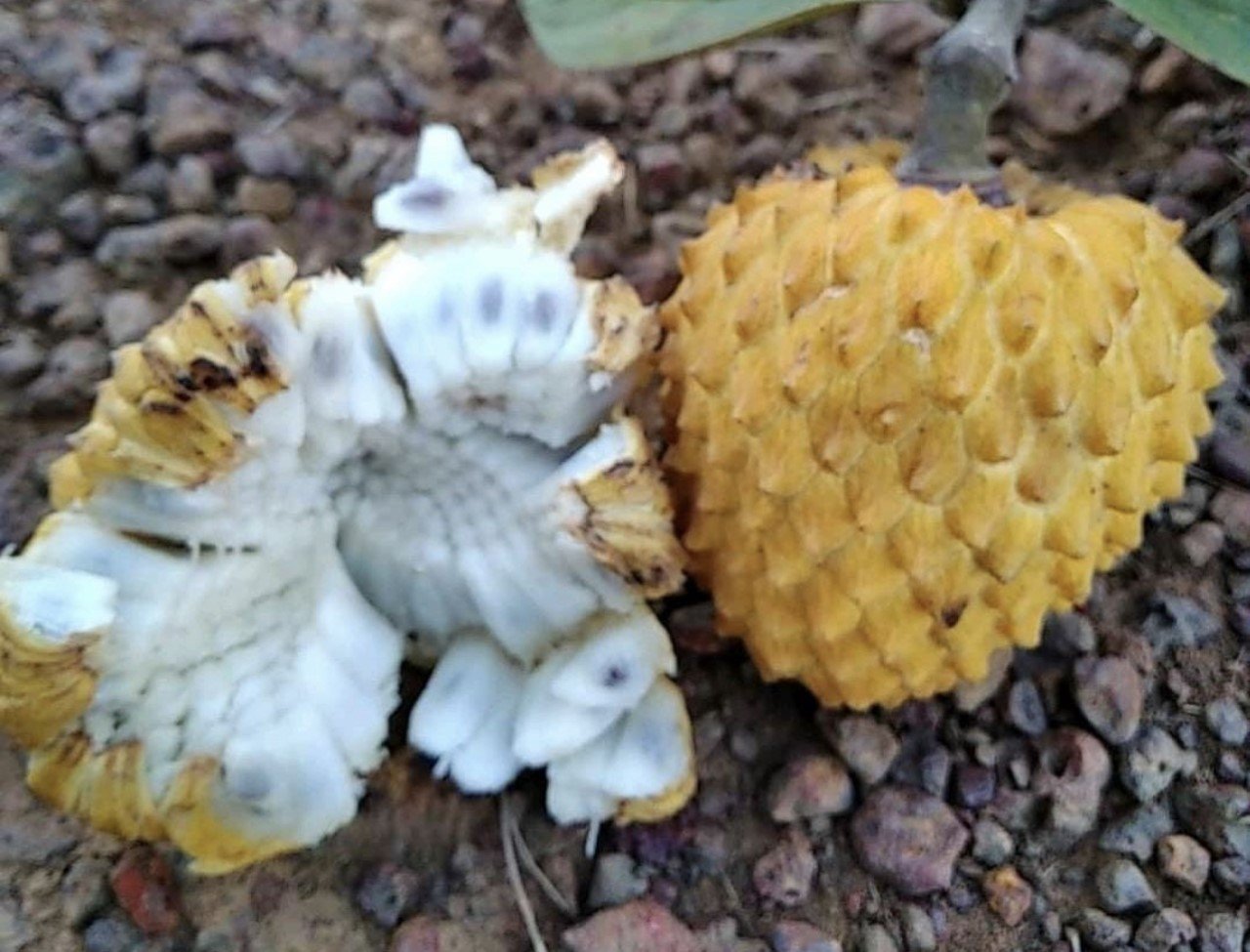
The fruits are yellow-orange when ripe, sometimes with soft spines on the skin, and contain sweet, creamy pulp that is highly regarded for fresh eating. The species is adapted to well-drained, sandy soils and seasonally dry conditions, and is reportedly hardy to temperatures around −2 °C (28 °F). Annona tomentosa also has traditional uses in Brazilian folk medicine, with leaves and other plant parts noted for anti-inflammatory and pain-relieving properties. Its compact size, edible fruits, attractive foliage, and tolerance of cooler temperatures make it a rare and desirable plant for collectors and botanical gardens.
Seeds are sold in packs of one. They are shipped in humid vermiculite.
Annona tomentosa is a small to medium-sized tree in the custard apple family (Annonaceae), native to the cerrados and seasonally dry tropical regions of Brazil and Bolivia. Its name refers to the dense, woolly hairs (tomentose texture) covering its young stems and leaves, giving the plant a soft, fuzzy appearance. In the wild it grows as a shrub or small tree around 0.5–2 meters tall, with thick, hairy foliage and clusters of cream-green flowers that attract beetle pollinators.
The fruits are yellow-orange when ripe, sometimes with soft spines on the skin, and contain sweet, creamy pulp that is highly regarded for fresh eating. The species is adapted to well-drained, sandy soils and seasonally dry conditions, and is reportedly hardy to temperatures around −2 °C (28 °F). Annona tomentosa also has traditional uses in Brazilian folk medicine, with leaves and other plant parts noted for anti-inflammatory and pain-relieving properties. Its compact size, edible fruits, attractive foliage, and tolerance of cooler temperatures make it a rare and desirable plant for collectors and botanical gardens.
Seeds are sold in packs of one. They are shipped in humid vermiculite.