

 Image 1 of 3
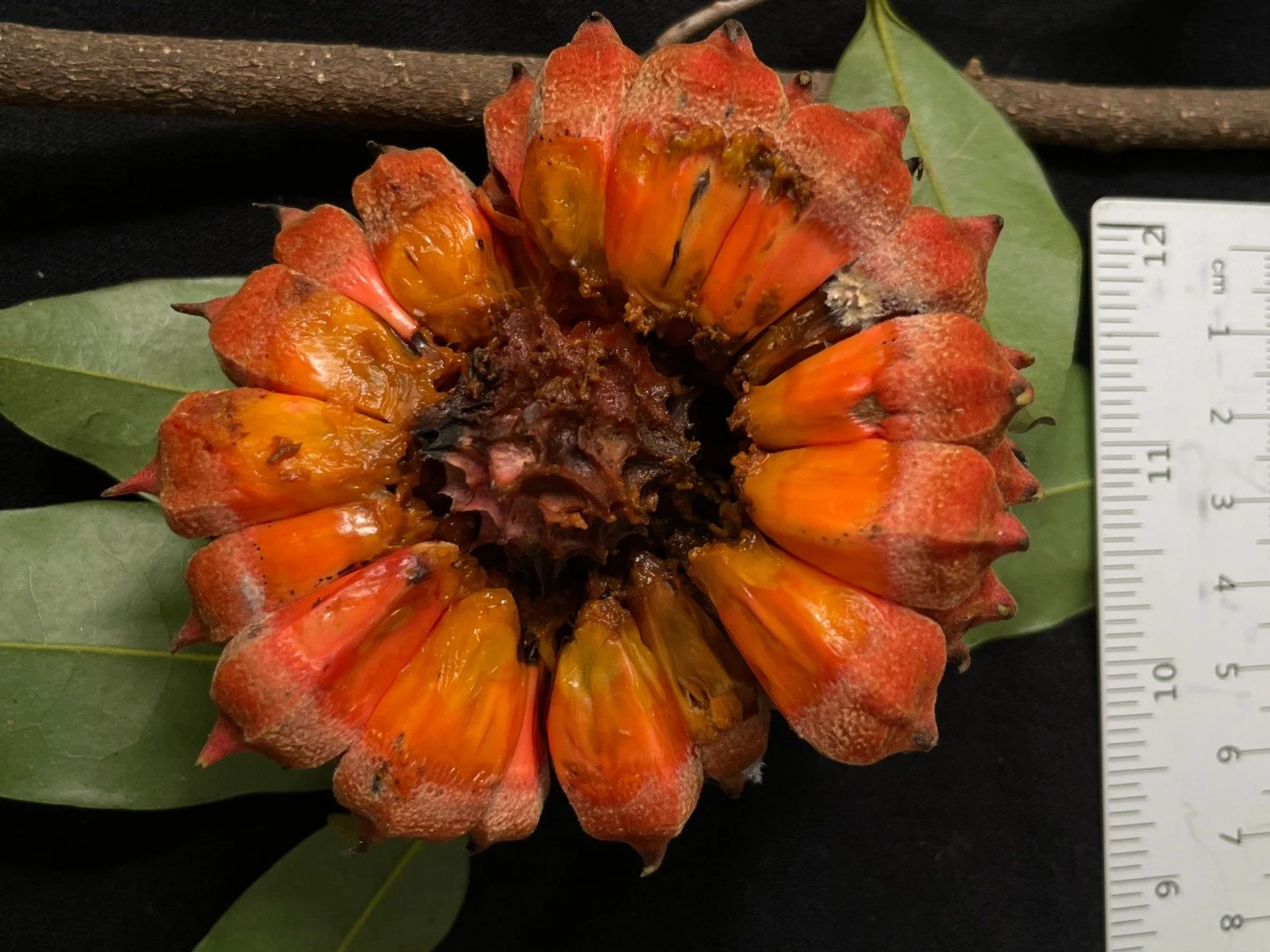 Image 2 of 3
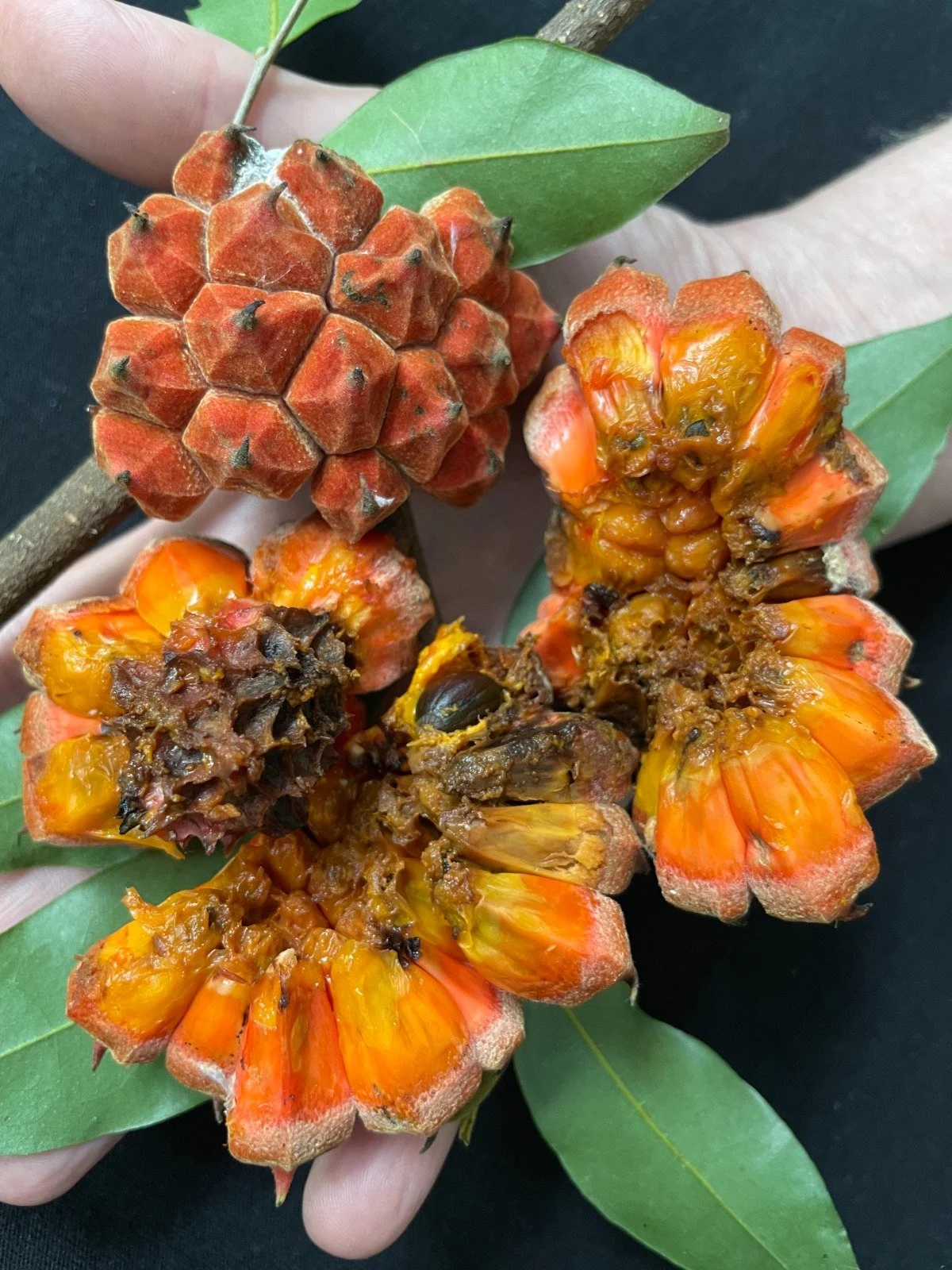 Image 3 of 3
Duguetia riedeliana, commonly known as Pindaíba-piranga, is a rare fruiting species endemic to the restinga forests of Rio de Janeiro, Brazil, and belongs to the Annonaceae family. It grows naturally as a shrub or small tree, reaching up to approximately 4 meters in height in the wild, though it typically remains smaller under cultivation. With its compact growth habit and attractive fruit clusters, it is an excellent ornamental species for tropical gardens and rare fruit collections.
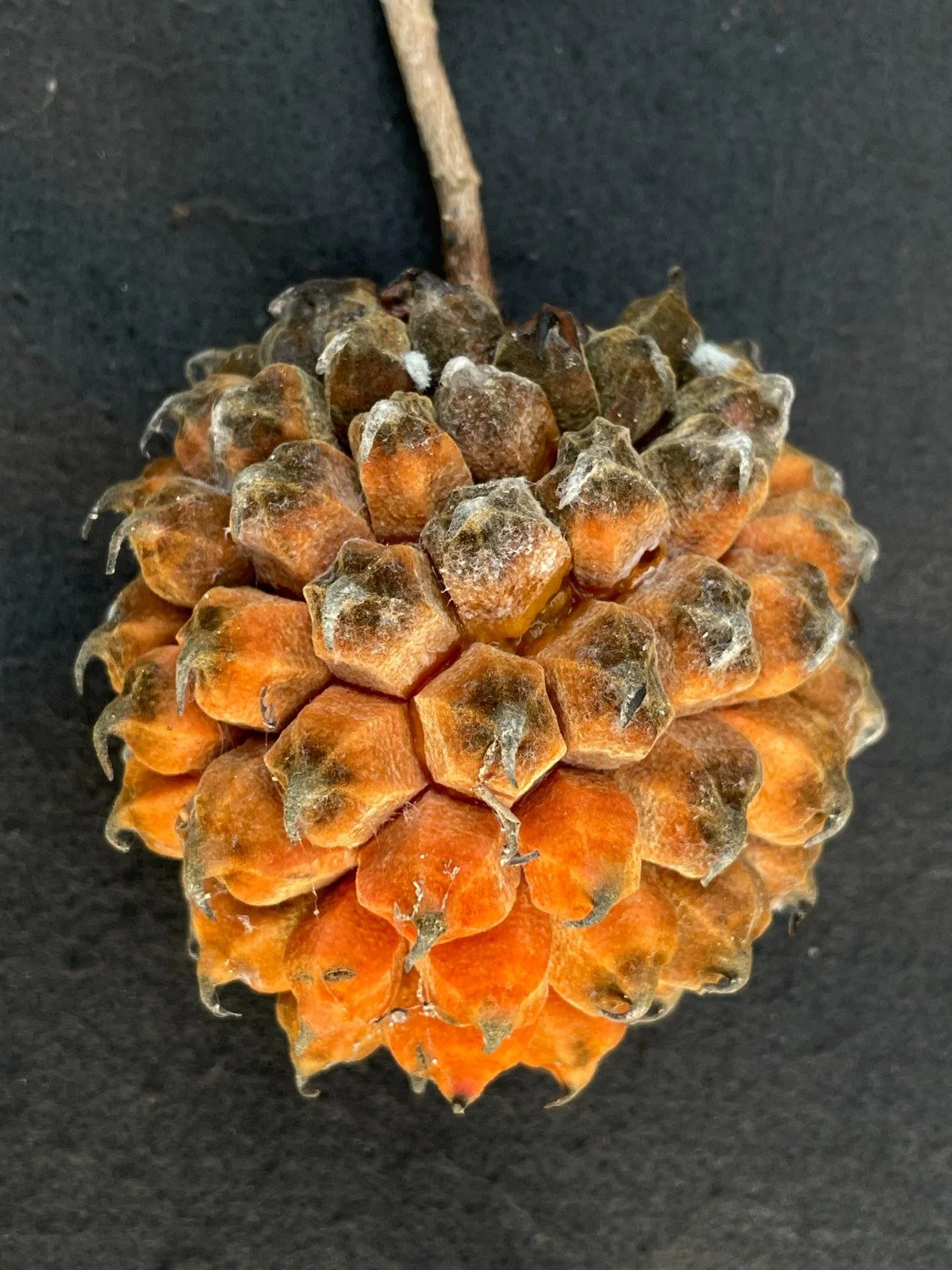
The fruits have a striking red exterior composed of more than 60 individual segments (carpels), each containing a small dark seed surrounded by bright yellow-orange pulp. The pulp is exceptionally sweet and pleasant, finishing with a subtle note reminiscent of candied orange. The fruits are highly regarded for fresh eating, with the flavorful pulp easily separating from the seeds.
Although relatively slow-growing, Duguetia riedeliana develops more quickly than many other species within the genus. Young plants benefit from partial shade during establishment but gradually adapt to full sun as they mature. Due to its rarity, outstanding fruit quality, and importance as a food source for wildlife, it is considered an excellent species for both collectors and agroforestry projects focused on native Brazilian fruits.
Seeds are shipped in packs of 1, shipped in humid vermiculite.
Duguetia riedeliana, commonly known as Pindaíba-piranga, is a rare fruiting species endemic to the restinga forests of Rio de Janeiro, Brazil, and belongs to the Annonaceae family. It grows naturally as a shrub or small tree, reaching up to approximately 4 meters in height in the wild, though it typically remains smaller under cultivation. With its compact growth habit and attractive fruit clusters, it is an excellent ornamental species for tropical gardens and rare fruit collections.
The fruits have a striking red exterior composed of more than 60 individual segments (carpels), each containing a small dark seed surrounded by bright yellow-orange pulp. The pulp is exceptionally sweet and pleasant, finishing with a subtle note reminiscent of candied orange. The fruits are highly regarded for fresh eating, with the flavorful pulp easily separating from the seeds.
Although relatively slow-growing, Duguetia riedeliana develops more quickly than many other species within the genus. Young plants benefit from partial shade during establishment but gradually adapt to full sun as they mature. Due to its rarity, outstanding fruit quality, and importance as a food source for wildlife, it is considered an excellent species for both collectors and agroforestry projects focused on native Brazilian fruits.
Seeds are shipped in packs of 1, shipped in humid vermiculite.